

SAFETY & REGULATIONS

Responsibility, on every road.

People, vehicle care, and journey visibility. A considered approach to chemical solvent, food-grade, pharmaceutical and other liquid cargo transportation.

NICER GLOBE CERTIFIED

Safe transport
is a shared responsibility.

Shree Maruti Transport Service is Nicer Globe certified.

Nicer Globe is an Indian Chemical Council initiative focused on safety, security, and emergency response in chemical transportation. This focus sits alongside our attention to drivers, vehicles, and the journey.

About the Nicer Globe initiative
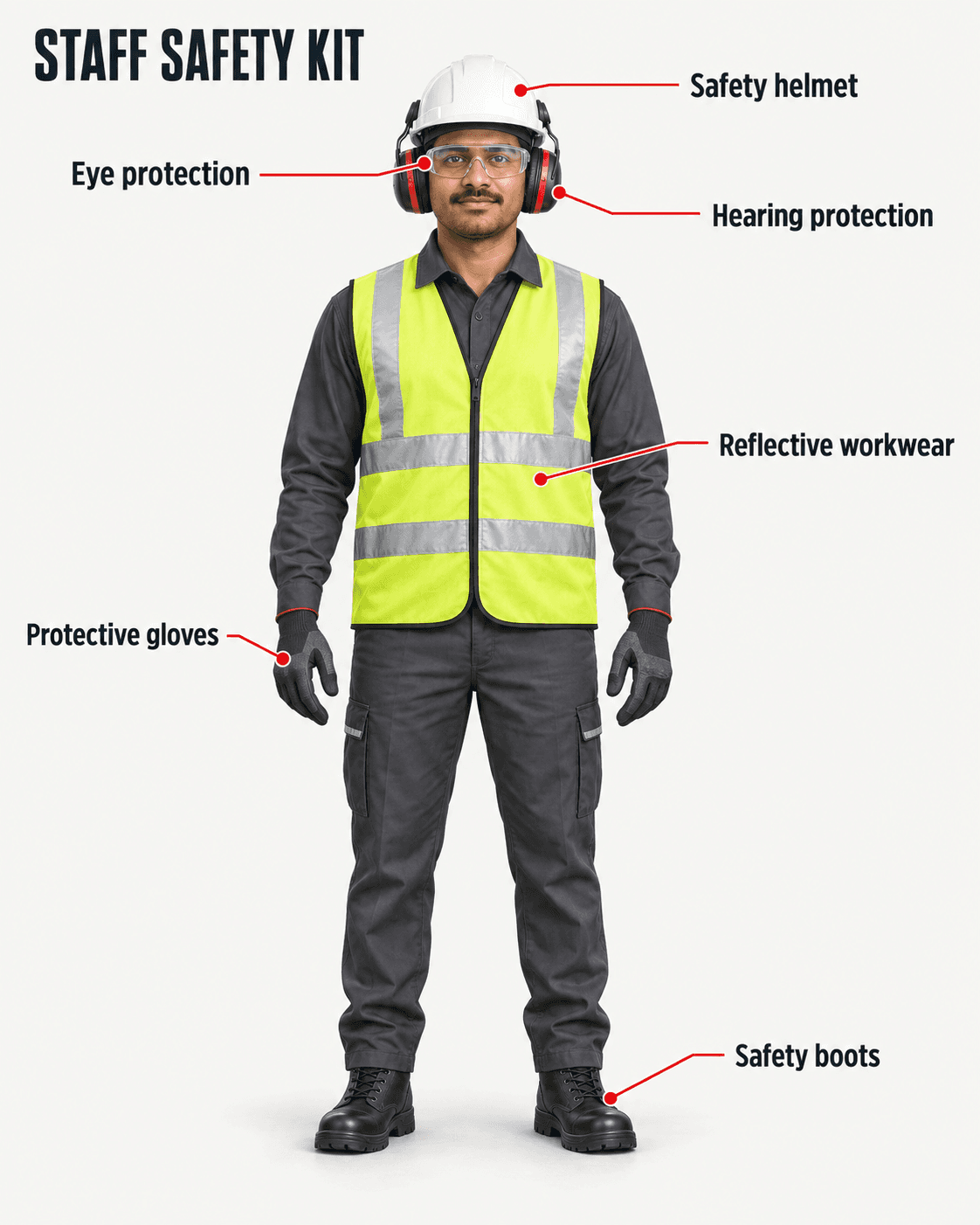
Illustrated worker wearing a safety helmet, protective eyewear, hearing protection, gloves, reflective workwear, and safety boots, with labelled callouts.
01 / PEOPLE & PROTECTIONIllustrative PPE guide. Equipment is selected for the cargo, task, and site conditions.

OUR PEOPLE. THEIR PROTECTION.

Careful handling.
Proper protection.

Our staff handle cargo with care, follow site precautions, and wear protective equipment suited to the work.

From loading through unloading, the focus is on the people handling the consignment as well as the cargo itself. Protective clothing and equipment are part of that preparation.

Equipment shown in the guide

  • Safety helmet
  • Protective eyewear
  • Hearing protection
  • Protective gloves
  • Reflective workwear
  • Safety boots

Illustrated equipment only. Selection depends on the task, product and site requirements.

  1. Understand the task.Review cargo-handling instructions and the site’s safety precautions before work begins.
  2. Wear the right equipment.Use protective equipment appropriate to the material, activity, and working environment.
  3. Handle with care.Coordinate with the loading or receiving team, and raise any unsafe condition before continuing.

SAFETY & REGULATIONS

Safer cargo transport.
From the first detail.

Road transport and logistics start with understanding the load. These are the safety and preparation topics to discuss when planning a chemical, liquid, or industrial cargo movement.

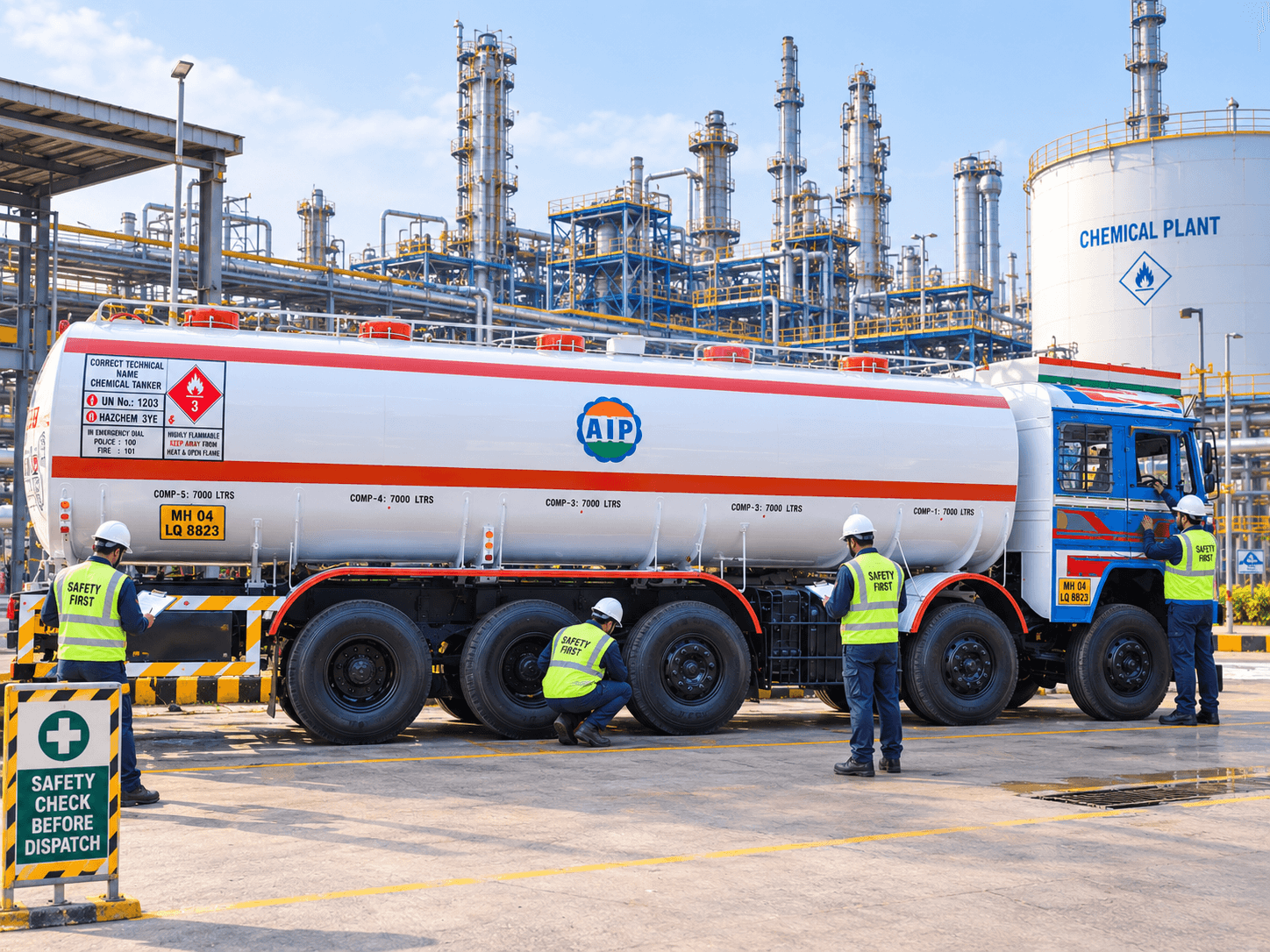
Personnel wearing safety equipment inspect a tanker before dispatch

PEOPLE & SITE SAFETY

Personal protective equipment

Plan protective equipment around the cargo and the loading site: head and eye protection, suitable gloves, protective clothing, and safety footwear. Confirm any additional site requirements before arrival.

KNOW THE LOAD

Cargo information & handling

Share the product name, safety data sheet, quantity, and handling instructions. For chemical and liquid cargo, discuss tanker suitability, loading arrangements, and unloading access before booking.

BEFORE DISPATCH

Vehicle & journey checks

Vehicle condition, tanker fittings, route access, and the receiving site all belong in the transport plan. Clear driver and site contacts support coordination from dispatch through delivery.

PREPARE THE DETAILS

Documentation & regulations

Documentation and permissions depend on the cargo, vehicle, and route. Confirm shipment details, relevant transport documents, site instructions, and emergency contact information with the transport team before dispatch.

PLAN YOUR SHIPMENT

Cargo acceptance, vehicle suitability, and applicable requirements are confirmed for each transport enquiry.

Discuss your cargo

CARGO AWARENESS

Nine hazard classes.
Start with identification.

Dangerous goods are grouped into nine transport hazard classes. The class describes the hazard; it does not, by itself, establish whether a product is suitable for a particular tanker.

An awareness guide, not a cargo acceptance list.

These classes are shown for general understanding. Share the safety data sheet and transport classification with your enquiry. Shree Maruti confirms product acceptance and tanker suitability before booking.

CLASS 1

Explosives

Explosive substances and articles.

CLASS 2

Gases

Flammable, non-flammable non-toxic, and toxic gases.

CLASS 3

Flammable liquids

Liquids classified for their flammability in transport.

CLASS 4

Flammable solids & reactive substances

Includes spontaneously combustible and water-reactive substances.

CLASS 5

Oxidizers & organic peroxides

Oxidizing substances and organic peroxides are separate divisions.

CLASS 6

Toxic & infectious substances

Toxic substances and infectious substances are separate divisions.

CLASS 7

Radioactive material

Materials classified for their radioactive properties.

CLASS 8

Corrosive substances

Substances classified for corrosive hazards.

CLASS 9

Miscellaneous dangerous goods

Other dangerous substances and articles covered by transport classification.

Simplified class guide based on the UN dangerous goods classification framework. The numbered graphics are navigation illustrations, not transport placards or labelling instructions.

FLEET TECHNOLOGY

Visibility supports
better coordination.

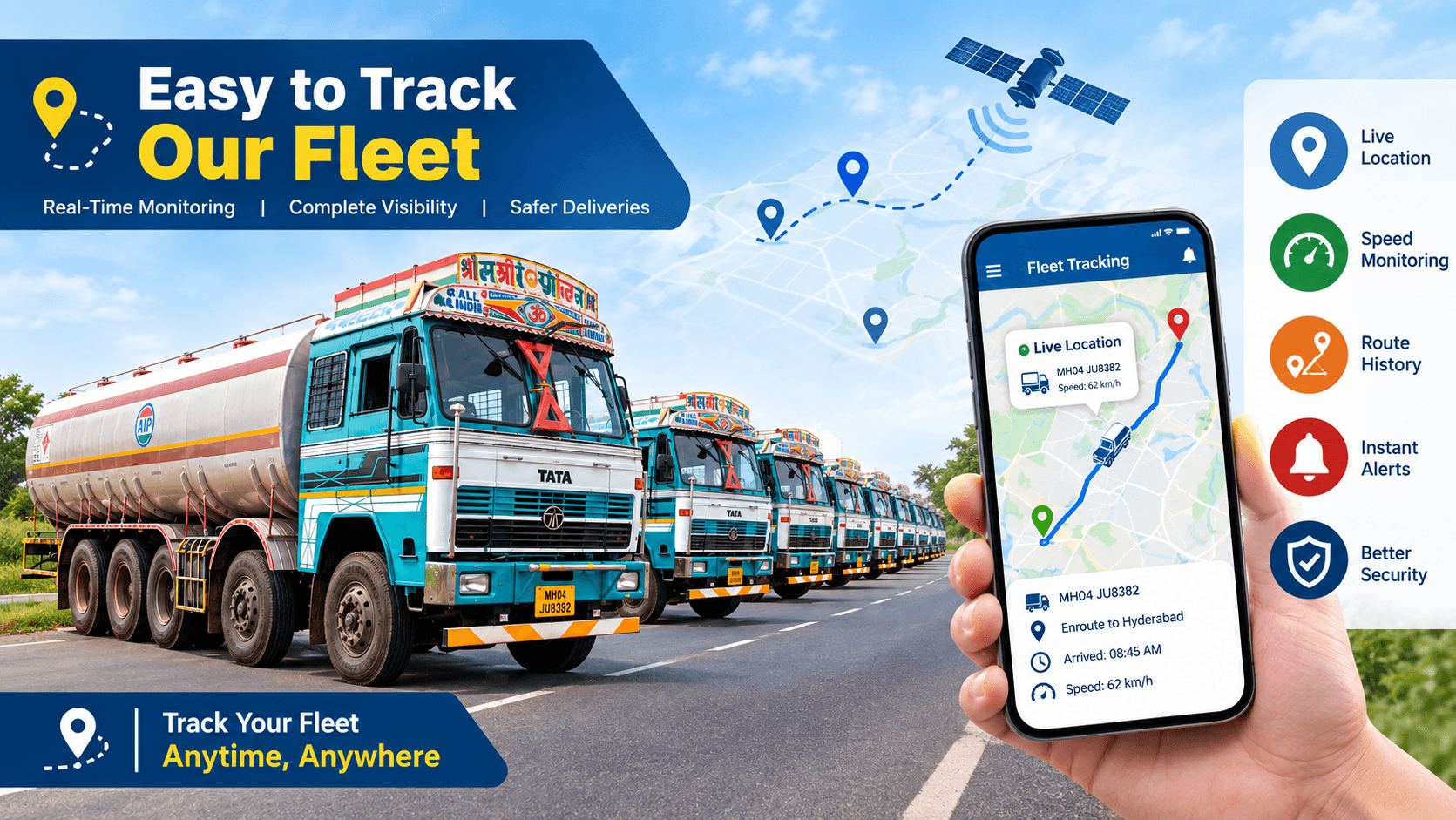
Our fleet-management tie-ups support the people coordinating vehicle movements.

Client-supplied illustration of GPS fleet tracking, route history, and vehicle monitoring

Illustrative technology graphic. This website does not provide live vehicle tracking.

Tata Motors Fleet Edge

A fleet-management tie-up supporting our transport operations.

BlackBox

A fleet-management tie-up supporting our transport operations.

YOUR NEXT MOVEMENT

Let’s get the details right.

Discuss your requirement